On 16 August 2004 a flash flood tore through Boscastle. Here is what happened that day, how everyone was rescued and how the village recovered.
Ask anyone who lived in North Cornwall in 2004 about the Boscastle flood and they will remember exactly where they were. On the afternoon of Monday 16 August 2004 a sudden, intense storm sent a wall of water down the Valency valley and through the heart of the village. Our farm sits up in the parish of St Juliot, above the valley, and the day is still talked about locally. This post explains what happened, how people were rescued and how Boscastle came back.
The rain
That morning looked like an ordinary summer day. By lunchtime, heavy showers were building over the high ground inland. A line of storms kept forming over the same spot instead of moving on, and rain poured onto the hills above Boscastle for hours.
The figures are remarkable. Around 75mm of rain is reported to have fallen at Boscastle in roughly two hours, while nearby Otterham recorded about 200mm in 24 hours, a huge amount for a single day. The ground was already wet from earlier rain, and the steep, narrow valleys of the Valency and its tributaries funnelled the water straight towards the village.
The flood
In the afternoon, the River Valency, normally a gentle stream that you can step across in places, rose very quickly. A surge of water, mud, trees and debris rushed down through the village towards the harbour.
Debris and cars built up against the old road bridge, briefly damming the flow before it gave way. Water poured through shops, homes and the hotel and filled the main car park in the valley. Dozens of cars, commonly reported as around 50 or more, were swept down the river and out into the harbour and the sea. Buildings were damaged or destroyed, and some were partly demolished by the force of the water.
The rescue
One of the most remarkable parts of the story is that no one died. People were trapped on roofs, in buildings and in their cars as the water rose. Seven helicopters from the RAF and Royal Navy, together with the coastguard, took part in what became one of the largest peacetime rescue operations in mainland Britain. Around 100 people, and by some accounts more, were lifted to safety by helicopter, while firefighters, police, lifeboat crews and local people helped others to escape.
Many people who were in the village that day still speak of the speed of the rescue and of the bravery of the crews.
The damage
When the water went down, the scale of the damage was clear. Around 60 properties were flooded and several were badly damaged. Bridges, roads and the car park were wrecked, and the harbour was full of cars, trees and rubble. Businesses that relied on summer visitors lost their peak season.
How Boscastle recovered
The rebuilding took several years. The main changes included:
- A wider, deeper river channel through the village so more water can pass safely.
- A new road bridge with a larger opening, so debris is less likely to build up.
- A redesigned main car park, set back further from the river.
- Upstream works to reduce how fast water reaches the village.
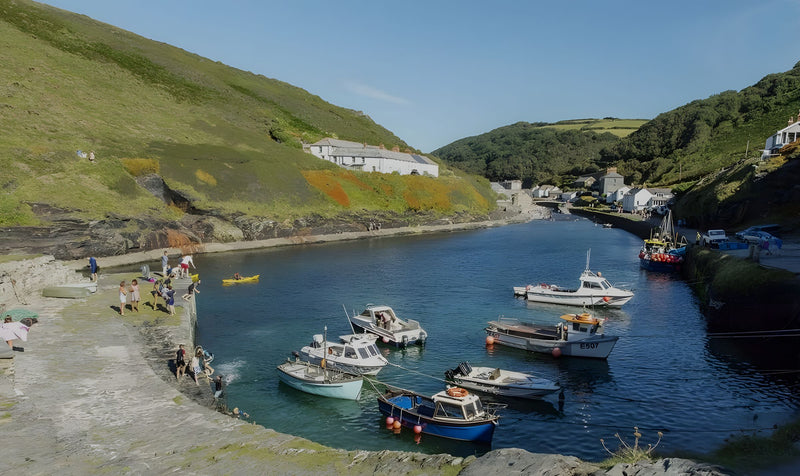
Many historic buildings were restored rather than replaced, and the National Trust, which owns much of the harbour, helped repair its properties. Today, visitors walking from the car park to the harbour see a lively village, and most people would never guess what happened unless they read the information boards.
For the longer story of the village, from Norman castle to harbour trade, read our Boscastle history for campers.
Seeing the flood story for yourself
You can follow the route of the flood on a gentle walk:
- Start at the main car park and look at how close it once was to the river.
- Walk down beside the river towards the harbour and notice the wider, stone-lined channel.
- Cross the new bridge and look upstream.
- Continue to the harbour, where the cars ended up.
For a longer walk, follow the river inland on the Valency Valley walk to see the wooded valley that carried the water. The Boscastle harbour guide covers what to see once you reach the sea.
Is it safe to camp and visit now?
Yes. A flood like 2004 is extremely rare, and the defences built since have greatly reduced the risk to the village. Our fields at Lower Pennycrocker Farm are on high farmland above the coast, well away from the valley floor. As with anywhere, pay attention to Met Office weather warnings during heavy rain and follow advice from local authorities. Our guide to camping in wind and rain has practical tips for wet weather.
Frequently asked questions
When was the Boscastle flood?
Monday 16 August 2004, mainly during the afternoon.
Did anyone die in the Boscastle flood?
No. Around 100 or more people were rescued, many by helicopter, and there were no deaths.
How many cars were washed away?
Reports vary, but it is generally given as around 50 or more, many of them carried out into the harbour and the sea.
What caused the flood?
Storms that kept forming over the same high ground for hours dropped very heavy rain onto already wet ground. The steep valleys funnelled the water into the village.
Could it happen again?
Extreme weather can never be ruled out, but the wider channel, the new bridge and other works since 2004 have greatly reduced the risk.
Stay near Boscastle
Lower Pennycrocker Farm is a quiet, family-run campsite at St Juliot, about two miles from Boscastle (PL35 0BY). We welcome tents, touring caravans, motorhomes and campervans from 1 April to 31 October. Adults are £10 a night, children aged 5 and over £5, electric hook-up £7 and dogs £2 each (maximum two). Showers are free and you park beside your pitch. Check availability and book direct, or see pitches and prices.