Everything you need for a visit to Boscastle harbour, from its Elizabethan walls to the blowhole and the best walks, written by the family at Lower Pennycrocker Farm.
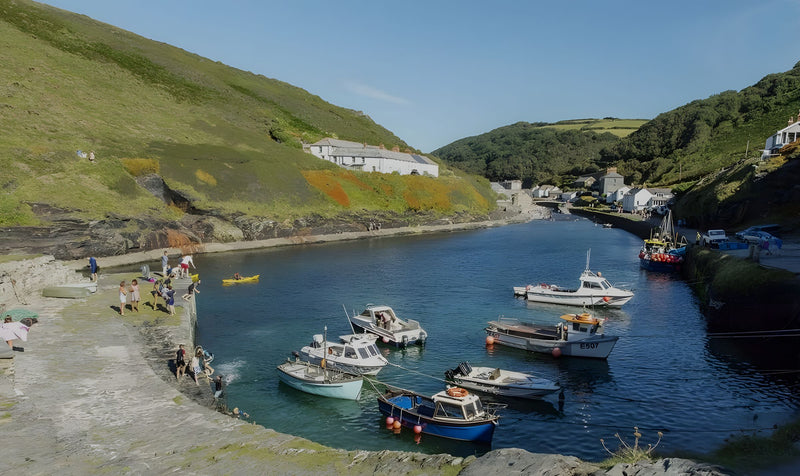
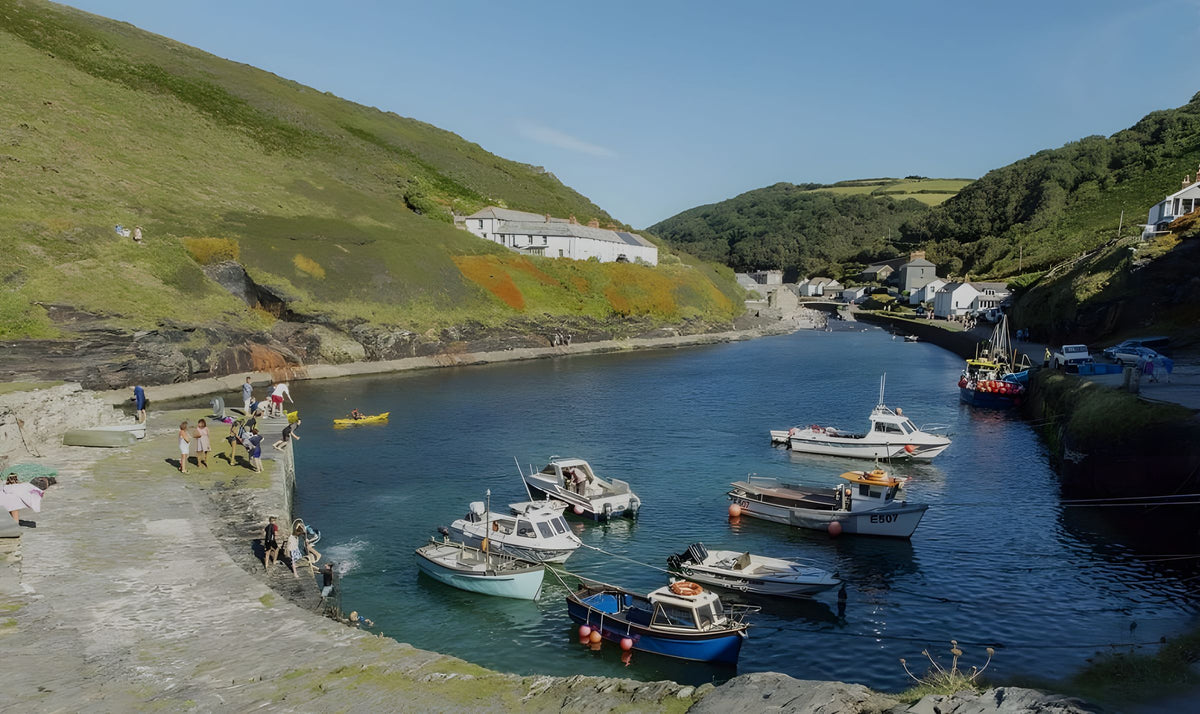
Boscastle harbour is one of the most photographed places on the North Cornwall coast, and it is about two miles from our fields at Lower Pennycrocker Farm. It is a narrow, twisting natural inlet cut between high slate cliffs, with a stone harbour wall at its head and the little River Valency running down to meet the sea. This guide covers what to see, how to get there and how to make the most of a visit, whether you have an hour or a whole day.
Why Boscastle harbour is special
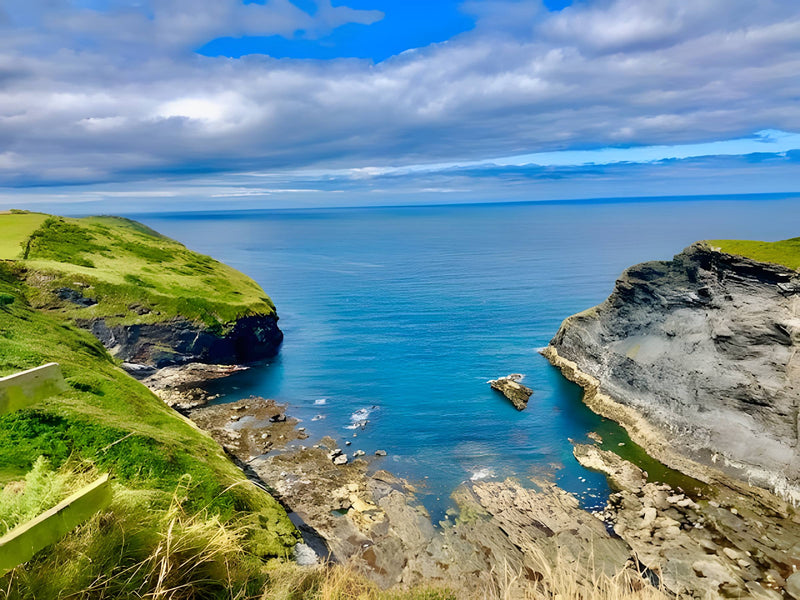
For a long stretch of this coast there is almost nowhere a boat can shelter. Boscastle is one of very few natural harbours on a long stretch of the north Cornish coast, which is why it mattered so much to traders and fishermen. The inlet bends sharply as it reaches the sea, which breaks up the Atlantic swell and gives the inner harbour its calm water.
The inner harbour walls are usually dated to 1584 and linked with Sir Richard Grenville, the Elizabethan sea captain. An outer breakwater was added later. Through the 1800s Boscastle was a busy little port, bringing in coal, timber and goods and sending out slate and farm produce. Ships could not simply sail in; they were towed through the narrow mouth by rowing boats known locally as hobblers, with horses helping on the quay.
You can read more about the wider story in our Boscastle history for campers post.
What to see around the harbour
The harbour walls and the quay
Start at the bridge in the village and follow the river down past the old stone buildings to the quay. At low tide you can see how shallow the inner harbour becomes, with boats sitting on the mud. At high tide on a calm day the water is a deep green and the whole scene feels like a painting.
The blowhole at Penally Point
On the north side of the harbour mouth, below Penally Point, is a blowhole sometimes called the Devil's Bellows. Around an hour either side of low tide, with a bit of swell running, the sea is forced through a cave and blasts out sideways across the harbour entrance with a boom. Watch from the paths above. Never climb down onto the rocks to get closer.
Meachard Island
Just outside the harbour mouth sits Meachard, a steep rocky island that is home to seabirds. It makes a fine frame for photos from the headlands.
The lookout on Willapark
High on the southern headland stands a small white tower. It was built as a pleasure house in the 1800s, later served as a lookout against smugglers and then as a coastguard station, and is now run by volunteers of the National Coastwatch Institution. The short climb is covered in our Willapark walk guide.
Places to visit by the harbour
The National Trust looks after much of the harbour and the surrounding land and runs a visitor centre near the main car park, with information about the area and its wildlife. Near the quay you will also find the Museum of Witchcraft and Magic, an independent museum that has been part of the village since 1960.
There are shops, galleries, cafés and pubs along the lane between the car park and the harbour. Our places to eat in Boscastle page and our guide to Boscastle pubs list the options.
Walks from Boscastle harbour
The harbour is where several of our favourite walks begin:
- Willapark loop: up to the lookout and back via Forrabury, about an hour.
- Pentargon waterfall: north along the coast path to look down on a stream falling from the cliffs. See the Pentargon walk.
- Valency valley: inland through woodland to St Juliot church. See the Valency Valley walk.
- Boscastle to Tintagel: a longer coast path day, best done one way with a bus or taxi back.
For a wider list, see our walks near Boscastle page.
Getting to the harbour
From Lower Pennycrocker Farm it is about two miles to the village. Many guests drive and use the main pay-and-display car park in the valley, which is a short level walk from the harbour. Cars should not be taken down to the harbour itself; the area by the quay is very limited. Our Boscastle parking guide has more tips. Keen walkers can also reach the harbour on foot via lanes and the coast path, but take a map as some lanes have no pavement.
When to visit
- Early morning: the light on the harbour walls is lovely and the village is quiet.
- Low tide: best for the blowhole and for seeing the structure of the harbour.
- High tide: best for photographs of the water and the boats afloat.
- Spring and autumn: fewer people, wildflowers in spring and calm, golden days in September and October.
August afternoons are the busiest time. If you visit then, arrive early or come in the evening.
The 2004 flood and the harbour today
In August 2004 a flash flood swept down the Valency valley and through the village into the harbour. No one died, but buildings, bridges and dozens of cars were destroyed. The village was rebuilt and the river channel widened and deepened. Read the full story in our Boscastle flood 2004 post.
Tips for a good visit
- Wear shoes with grip. The quay and slipways are slippery, especially near the water.
- Keep children and dogs well back from the harbour edge and the cliff paths.
- Bring a layer. Even on sunny days the wind funnels down the inlet.
- Check tide times before you go if you want to see the blowhole.
Frequently asked questions
How far is Boscastle harbour from Lower Pennycrocker Farm?
About two miles, a few minutes by car. Fit walkers can also walk in, but some lanes have no pavement.
Is Boscastle harbour free to visit?
Yes. Walking around the harbour and the paths is free. You pay for parking, and some attractions such as the museum charge for entry.
When does the Boscastle blowhole work?
It is most active around low tide when there is some swell. On flat calm days it may do very little.
Can you swim in Boscastle harbour?
The harbour is a working inlet with boats, currents and cold water, so it isn't a swimming beach. For swimming, head to a lifeguarded beach such as those around Bude in summer.
Not sure where to base yourself? Compare Boscastle, Tintagel and Bude.
Stay near Boscastle
Lower Pennycrocker Farm is a quiet, family-run campsite at St Juliot, about two miles from Boscastle (PL35 0BY). We welcome tents, touring caravans, motorhomes and campervans from 1 April to 31 October. Adults are £10 a night, children aged 5 and over £5, electric hook-up £7 and dogs £2 each (maximum two). Showers are free and you park beside your pitch. Check availability and book direct, or see pitches and prices.
Much of the harbour, valley and coast around Boscastle is cared for by the National Trust. Our National Trust Boscastle guide covers the visitor centre, parking and the best walks.