How to read the weather forecast for a camping trip to north Cornwall: what wind speeds mean for tents, coastal rain, sea fog and when to change your plans.
The weather on the north Cornwall coast is rarely extreme, but it changes quickly. The Atlantic is right on the doorstep, so wind and passing showers are part of camping here. This guide explains how to read a forecast before and during a stay at Lower Pennycrocker Farm near Boscastle, and when to change your plans. For pitching tips in bad weather, see our separate post on camping in wind and rain in Cornwall.
Why the north coast is different
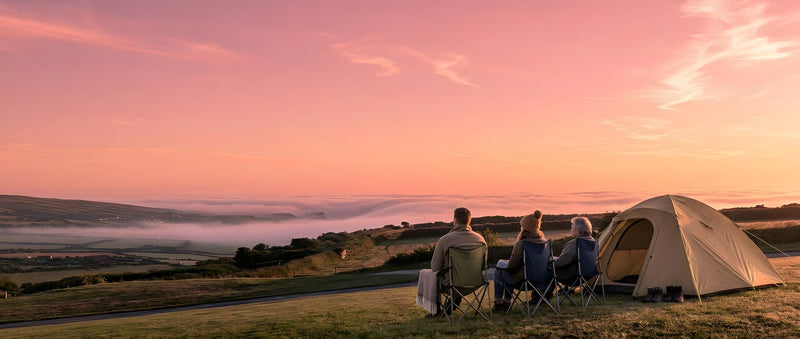
North Cornwall faces west and north-west, straight into the prevailing Atlantic winds. That brings fresh air, big skies and dramatic sunsets, but also:
- Wind: even on a fine day there is often a breeze on the clifftops.
- Fast-moving showers: a shower can come and go within half an hour.
- Sea fog (mist): low cloud can roll in off the sea, particularly in spring and early summer, and burn off later.
- Mild nights: the sea moderates temperatures, although clear nights can still be chilly.
Which forecast to use
Use a reliable source such as the Met Office and look at the forecast for the coast near Boscastle rather than a big inland town. Bodmin Moor, just inland, is higher and can be cloudier, windier and wetter than the coast.
Check:
- The hourly forecast, not just the daily symbol.
- Wind gusts as well as average wind speed.
- Wind direction: a north-westerly blows straight in off the sea.
- Rain probability and amount: a 40% chance of light showers is very different from a band of heavy rain.
- Weather warnings, issued by the Met Office for strong wind and heavy rain.
What wind speeds mean for a tent
The Met Office's camping advice, written with the Scouts, notes that most tents are designed to withstand a certain amount of wind, but speeds over 30 mph can cause damage. As a rough guide:
| Gusts | What it means for campers |
|---|---|
| Under 20 mph | Comfortable for most tents. |
| 20–30 mph | Breezy. Guy every line and check pegs. |
| 30–40 mph | Lighter tents and large family tents may struggle. Take down awnings and gazebos. |
| Over 40 mph | Think seriously about delaying or packing away. |
These are guides, not rules. The shape and quality of your tent matter. Our post on choosing a tent for Cornwall covers wind-worthy designs.
Rain
Rain on the north coast often comes in bands, with clearer spells in between. If a band is forecast for your arrival, consider arriving a little later once it has passed. Reception is open until 7pm. If you have to pitch in the rain, keep the inner tent dry by pitching the flysheet first if your tent allows.
Sea fog and the coast path
Fog makes the coast path feel very different. It is easy to lose your bearings and harder to see the edge, which is often unfenced. In fog, choose a shorter, familiar walk, carry a map and turn back early. Our walks near Boscastle page has options of different lengths.
Sunshine and UV
A cool breeze can hide strong sunshine. Use sun cream and hats even on days that do not feel hot, particularly on the beach and the coast path.
Thunderstorms
Thunderstorms are not common here, but they do happen. The Met Office advises sheltering in a building or a car, not a tent, and notes that the danger can last up to half an hour after the storm has passed.
When to change your plans
- If gusts over 40 mph or a wind warning are forecast for your arrival day, contact us on 07967 605392 to talk it through.
- If a storm is forecast mid-stay, take down awnings and gazebos early, pack loose kit into the car and be ready to sleep in the car if needed.
- Swap a coast walk for a sheltered valley or a rainy-day plan.
The upside
The same Atlantic weather gives north Cornwall its clear air and sunsets. Some of our favourite evenings come right after the rain clears. Read our post on sunsets and stargazing in north Cornwall, and pack for every season with our seasonal packing guide.
Frequently asked questions
Is north Cornwall always windy?
Not always, but the coast is exposed and a breeze is common. Inland valleys are often calmer.
How windy is too windy for a tent?
The Met Office notes that speeds over 30 mph can damage tents. Check gusts, not just average speeds.
Is Bodmin Moor weather different from the coast?
Yes. The moor is higher and can be cloudier, wetter and windier.
Stay near Boscastle
Lower Pennycrocker Farm is a quiet, family-run campsite at St Juliot, about two miles from Boscastle (PL35 0BY). We welcome tents, touring caravans, motorhomes and campervans from 1 April to 31 October. Adults are £10 a night, children aged 5 and over £5, electric hook-up £7 and dogs £2 each (maximum two). Showers are free and you park beside your pitch. Check availability and book direct, or see pitches and prices.