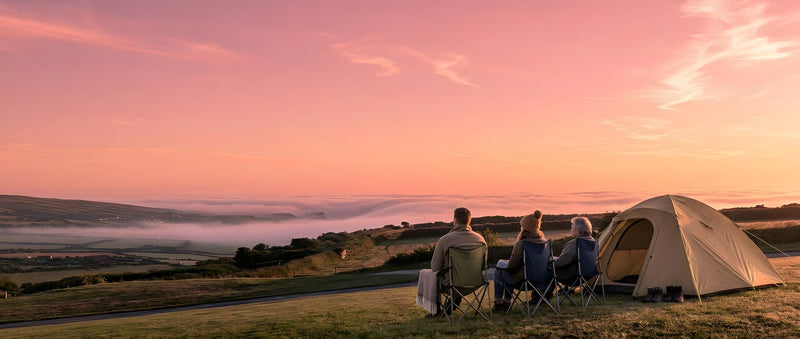
A clear guide to wild camping in Cornwall: what the law says, the practical risks and the alternatives.
Waking up on a clifftop with the sea below is a dream for many campers. But before you pack a tent and head for the Cornish coast, it is important to understand the rules. This guide explains, in plain terms, where wild camping stands in Cornwall, the practical risks, and some good alternatives. We run a small farm campsite near Boscastle, so we have a view, but we have tried to keep this guide balanced.
This is general information, not legal advice. Rules can change, so check with landowners and local authorities if in doubt.
Is wild camping legal in Cornwall?
In England, including Cornwall, there is no general right to wild camp. Almost all land is owned by someone, whether a farmer, the National Trust, a council or another landowner, and camping without the landowner's permission is not allowed. In most cases, camping without permission is treated as trespass, a civil matter, and you can be asked to leave. Some places also have byelaws or specific rules that can lead to fines.
Scotland has different access laws, and Dartmoor in Devon has its own long-running and well-publicised arrangements. Those do not apply to Cornwall's coast or to Bodmin Moor.
What about the coast path?
The South West Coast Path is a right of way for walking. It does not give a right to camp beside it. Much of the land next to the path is privately owned or cared for by the National Trust, which does not generally allow wild camping on its land.
Beaches
Beaches are owned by various bodies, and many have local rules. Overnight camping, fires and barbecues are often restricted. Check signs before you settle down.
Motorhomes and campervans
Sleeping in a motorhome in a car park or lay-by is a grey area that depends on local rules. Many car parks in Cornwall have signs banning overnight stays or sleeping in vehicles, and fines can apply. Parking in passing places or on verges can block narrow lanes, including for emergency vehicles. Campsites are the reliable, legal option.
Practical risks of wild camping on the Cornish coast
- Cliffs: pitching near cliff edges is dangerous, especially in the dark, in wind or after rain.
- Tides: coves can be cut off by the tide, and some beaches are completely covered at high water.
- Weather: Atlantic storms can arrive quickly and with strong winds, and there is little shelter on exposed headlands.
- Livestock: fields may contain cattle or sheep.
- No facilities: no toilets, water or waste disposal.
Leave no trace
If you do get permission from a landowner to camp, follow these principles:
- Arrive late and leave early.
- Pitch small and stay one night.
- No fires unless explicitly allowed.
- Take all rubbish home.
- Use proper toilets, or bury human waste well away from water.
- Leave the place exactly as you found it.
Better options: small, quiet campsites
Many people who want to wild camp are really looking for peace, space and views. Small, family-run campsites can offer this, with the bonus of hot showers, toilets and parking.
At Lower Pennycrocker Farm, near Boscastle, we have open grass fields with sea views, about half a mile from the coast path. There is no bar, no entertainment and no play area, just quiet fields and dark skies. Adults are £10 a night. Read our quiet camping in Cornwall page for more on what that's like.
For coast path walkers
If you are walking the South West Coast Path, a campsite close to the path makes a good overnight stop. See our page for coast path walkers.
For stargazers
North Cornwall has wonderfully dark skies away from the towns. You can enjoy them from a campsite pitch without risking a night on a cliff. Our sunsets and stargazing post has tips.
Tips for a "wild-feeling" camping trip
- Choose a small site without entertainment.
- Book a non-electric pitch and use lanterns.
- Cook simple meals on a stove; see our easy camping meals.
- Leave the car and walk the coast path from the campsite.
- Visit in spring or autumn for the quietest experience.
Respecting the countryside
Cornwall's landscape is farmed, protected and loved by local people. Unauthorised camping, fires and litter cause real problems for farmers and wildlife. By using campsites and following the Countryside Code, you help keep Cornwall's coast open and welcoming for walkers.
Fires and barbecues
Wildfires on cliffs and heathland can spread quickly, especially in dry, windy weather. Many landowners and beaches ban fires and disposable barbecues. If you want a campfire, choose a campsite that allows them and ask on arrival. At Lower Pennycrocker Farm, please ask us about fires when you arrive.
Getting permission
If you have your heart set on camping somewhere specific, the honest route is to ask. Farmers are sometimes happy to let a walker pitch a small tent for a night if asked politely in advance, but don't expect it, and accept a no gracefully. Never assume that an empty field is fair game. Fields that look empty may be resting for hay, home to nesting birds or about to have livestock moved in.
Frequently asked questions
Is wild camping legal in Cornwall?
There is no general right to wild camp in Cornwall. You need the landowner's permission.
Can I wild camp on Bodmin Moor?
Bodmin Moor does not have a general right to wild camp. You need the landowner's permission.
Can I sleep in my campervan in a Cornish car park?
Many car parks prohibit overnight stays. Check the signs and local rules, or use a campsite.
What is the best alternative to wild camping?
A small, quiet campsite near the coast path, such as Lower Pennycrocker Farm near Boscastle.
Stay near Boscastle
Lower Pennycrocker Farm is a quiet, family-run campsite at St Juliot, about two miles from Boscastle (PL35 0BY). We welcome tents, touring caravans, motorhomes and campervans from 1 April to 31 October. Adults are £10 a night, children aged 5 and over £5, electric hook-up £7 and dogs £2 each (maximum two). Showers are free and you park beside your pitch. Check availability and book direct, or see pitches and prices.
Still deciding where to base yourself? Our guide to the best areas to camp in Cornwall compares the north, south and west coasts.