A plain-English guide to electric hook-up on campsites, for tents, caravans and motorhomes.
If you are new to camping, "electric hook-up" (often shortened to EHU) can sound a little technical. In fact, it is simple: it's a mains electricity supply to your pitch. This guide explains what electric hook-up is, whether you need it, what kit you need, and how to use it safely.
What is electric hook-up?
Electric hook-up is a weatherproof outdoor power point on or near your pitch. You plug in a special cable that runs to your tent, caravan or motorhome, giving you mains-voltage electricity. With it, you can charge phones, run lights, use a small kettle or fridge, and power your caravan or motorhome's electrics.
The hook-up point is usually a post or bollard with one or more blue industrial-style sockets.
Do you need electric hook-up?
It depends on how you camp.
Tents
Many tent campers manage happily without electric, using battery lanterns and gas stoves. Electric hook-up is useful if you want to charge devices, use a small electric heater in the shoulder seasons, or keep a cool box running. You'll need a tent hook-up unit, which is a weatherproof box with sockets, protected by a safety trip switch.
Caravans and motorhomes
Most caravans and motorhomes are designed to use hook-up. It powers the mains sockets, can charge the leisure battery, and may run the fridge, water heater and space heater. You can manage without it for a night or two, but for longer stays it makes life much easier.
What you'll need
- A hook-up cable. These are usually orange or blue with industrial-style connectors at each end. Choose a length of 25m, as hook-up points can be some distance from your pitch.
- A tent hook-up unit if you are camping in a tent.
- A mains adaptor if you want to plug in household-style plugs inside a caravan or motorhome that doesn't already have them.
Using electric hook-up safely
- Connect the cable to your tent, caravan or motorhome first, then to the hook-up post.
- Uncoil the cable completely. A coiled cable can overheat when carrying a load.
- Keep connectors off the ground and out of puddles where you can.
- Route the cable safely, so people won't trip and cars won't drive over it.
- Don't overload the supply. Hook-up supplies have a limited current. Running several high-power items, such as a kettle, a hairdryer and a heater, at the same time can trip the supply.
- Disconnect at the post first when you leave.
If the supply trips, switch off some appliances before resetting your own trip switch. If you can't get power back, contact the campsite.
What can you run?
As a guide, low-power items such as phone chargers, lights, laptops, fridges and small TVs are fine. Choose low-wattage kettles and toasters designed for camping. High-power items such as large heaters, hairdryers and standard kettles are more likely to trip the supply, especially if used together.
How much does electric hook-up cost?
Electric hook-up is usually charged per night on top of the pitch fee. At Lower Pennycrocker Farm, electric hook-up is £7 per night. For example, a couple with electric hook-up pays £27 a night, and a family of two adults and two children aged 5 or over with electric pays £37 a night. See our pitches and prices page for full details.
Tips for grass pitches
- Bring a long cable.
- Position your caravan or motorhome so the inlet is on the side nearest the hook-up post if you can.
- Level your outfit before connecting, so you don't have to move it again.
Read our guide to levelling a motorhome or caravan on grass.
Saving power
Even with hook-up, using power wisely is good for the planet and avoids tripping the supply:
- Use LED lights.
- Boil only the water you need.
- Use gas for cooking if you have it.
- Charge devices during the day.
Without electric: off-grid tips
If you choose a non-electric pitch, consider:
- A portable power bank or power station for phones and lights.
- Solar panels for caravans and motorhomes.
- Gas for cooking and heating water.
- Battery or solar lanterns.
Our first-time camping tips post has more ideas.
Which pitch should you book?
If you are in a caravan or motorhome, or camping early or late in the season when evenings are cooler, electric is usually worth it. If you are in a tent in summer and happy to go simple, a non-electric pitch keeps costs down. Our post on camping in Cornwall on a budget has more money-saving tips.
Common hook-up problems
- No power at all: check that both ends are firmly connected and that your own trip switch is on. Then check the post.
- Power keeps tripping: you are likely using too many high-power appliances at once. Switch some off.
- Cable too short: ask the site if there's a pitch nearer a post, or bring a longer cable next time. Don't join several short cables if you can avoid it.
- Wet connectors: dry them carefully with the power off and keep them off the ground.
Frequently asked questions
What does EHU mean on a campsite?
EHU stands for electric hook-up, a mains power supply to your pitch.
Can I use electric hook-up in a tent?
Yes, with a tent hook-up unit that includes a safety trip switch.
How long should my hook-up cable be?
25m is a good length, especially on grass pitches.
How much is electric hook-up at Lower Pennycrocker Farm?
£7 per night on top of the pitch fee.
Stay near Boscastle
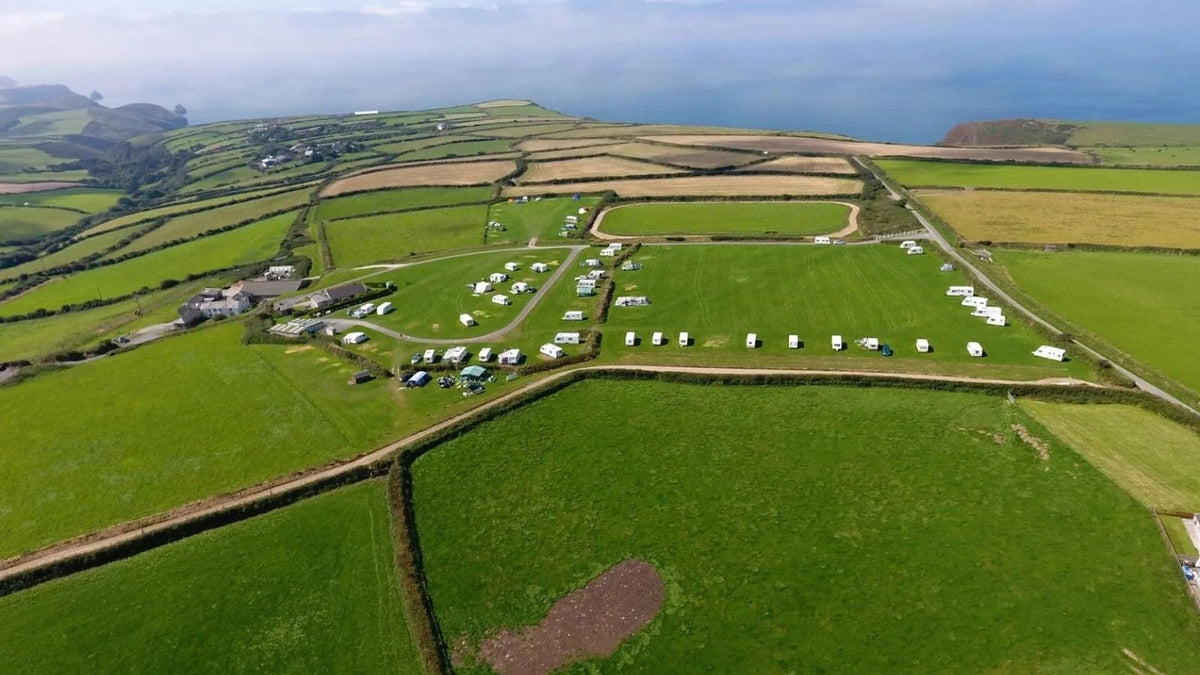
Lower Pennycrocker Farm is a quiet, family-run campsite at St Juliot, about two miles from Boscastle (PL35 0BY). We welcome tents, touring caravans, motorhomes and campervans from 1 April to 31 October. Adults are £10 a night, children aged 5 and over £5, electric hook-up £7 and dogs £2 each (maximum two). Showers are free and you park beside your pitch. Check availability and book direct, or see pitches and prices.