A step-by-step guide to getting your motorhome or caravan level on a grass pitch.
Many of the loveliest campsites in Cornwall have grass pitches rather than hardstanding. Grass is quiet, green and soft underfoot, but it is rarely perfectly flat. A level van means you sleep better, doors close properly, the fridge works efficiently, and water drains from sinks and showers. This guide explains how to level a motorhome or caravan on grass, based on what we see every season at our farm campsite near Boscastle.
Why levelling matters
- Sleep: sleeping on a slope is uncomfortable, and you may roll towards one side.
- Fridges: some absorption fridges work less well if the van isn't level.
- Water: sinks and showers drain properly when level.
- Doors and lockers: they open and close more smoothly.
- Safety: a stable van is less likely to move.
Kit you'll need
- Levelling ramps: stepped or curved ramps you drive onto.
- Chocks: to stop wheels rolling.
- Spirit level or levelling app: to check side to side and front to back.
- Steady pads or boards: to stop steadies or jacks sinking into soft ground.
- Caravan levelling aids: such as a wheel level or a jockey wheel pad.
Levelling a motorhome
1. Choose your spot
Walk the pitch first. Look for the flattest area and avoid dips that might collect water. Think about where your door and awning will go and where the hook-up post is.
2. Check the slope
Park roughly in position and use a spirit level on the floor or worktop, or a levelling app on your phone, to see which way the van slopes.
3. Place the ramps
Put ramps in front of, or behind, the wheels on the low side. Most motorhomers level front to back by putting ramps under the front wheels, as beds are often at the back.
4. Drive on slowly
Drive slowly onto the ramps with a helper guiding you. Stop on the step that gets you closest to level.
5. Chock the wheels
Put chocks behind the wheels and apply the handbrake. On grass, put a board under the ramps if the ground is soft.
6. Fine-tune
Recheck the level. If it isn't right, move up or down a step on the ramps.
Levelling a caravan
Side to side
Caravans are levelled side to side using a ramp under the wheel on the low side. A motor mover makes this easier. Some people use a winding leveller that lifts the wheel.
Front to back
Use the jockey wheel to level front to back, then lower the corner steadies.
Steadies
Corner steadies stabilise the caravan, but they aren't for lifting it. Use steady pads on grass to stop them sinking.
Soft or wet grass
After rain, grass can be slippery and soft:
- Avoid spinning your wheels, which damages the grass and can get you stuck.
- Use grip mats under drive wheels if needed.
- Leave the vehicle in a lower gear and move slowly.
- Ask the campsite owner to suggest the best pitch.
If you're worried about leaving a wet pitch, plan to move off gently and early, before the grass gets churned up.
Common mistakes
- Levelling too far from the hook-up post.
- Forgetting chocks.
- Using steadies to lift the caravan.
- Parking on a slope with the door facing uphill.
- Not checking level after setting up.
Tips for Cornwall
- Wind direction: on the north coast, the prevailing wind often comes from the west. Consider pitching so your door faces away from the wind.
- Hook-up: bring a 25m cable. See electric hook-up explained.
- Awning: set up the awning after levelling. Awnings are free at our campsite.
At Lower Pennycrocker Farm
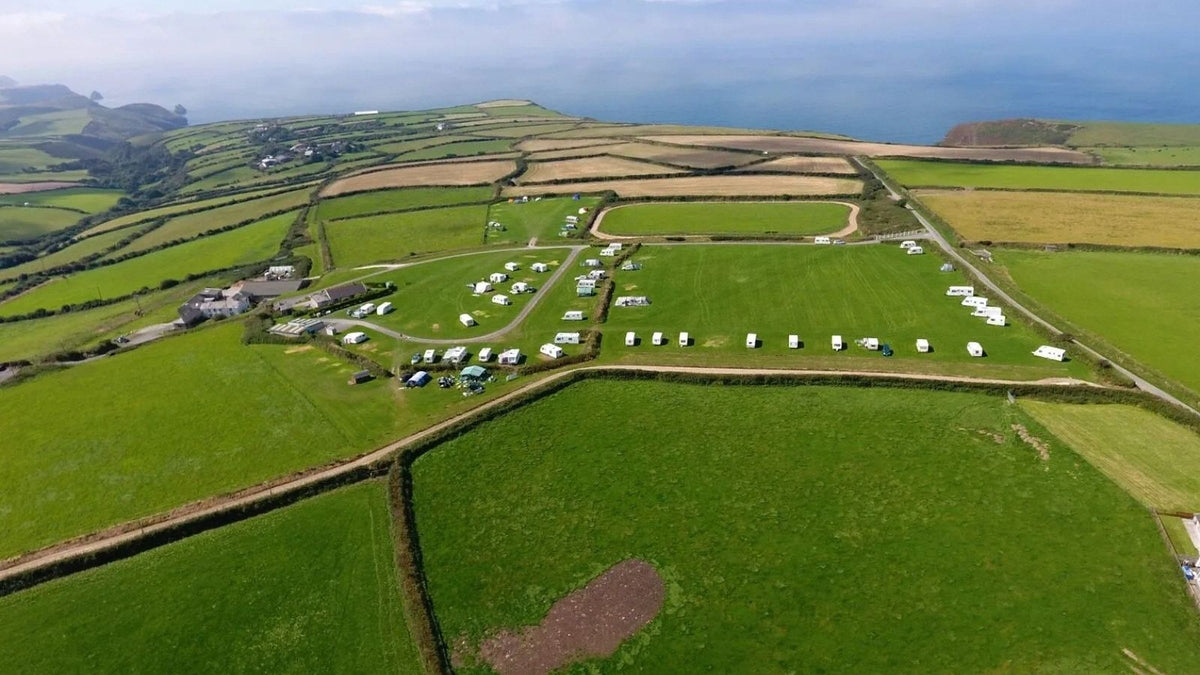
Our pitches are on open grass fields on a working farm, about two miles from Boscastle. Please bring levelling ramps and a long hook-up cable. Read more on our touring caravans and motorhomes page, or see our motorhome packing checklist.
Do I need fancy kit?
No. A pair of good stepped ramps, chocks, steady pads and a levelling app on your phone are all most people need. Automatic levelling systems are available on some motorhomes, but they still need firm ground and pads on grass. Keep your levelling kit somewhere easy to reach so you can set up quickly, even in the rain.
Quick reference
- Walk the pitch.
- Park roughly in position.
- Check the slope.
- Use ramps or a jockey wheel to level.
- Chock the wheels.
- Lower steadies with pads.
- Recheck and adjust.
- Connect hook-up and set up the awning.
Leaving the pitch
When it's time to go, raise the steadies first, then remove the chocks and drive or wind slowly off the ramps. On wet grass, drive off gently in a low gear. Collect all your ramps, pads and chocks; they're easy to leave behind in long grass. Check the pitch for anything else before you head for the narrow Cornish lanes.
Frequently asked questions
Do I need levelling ramps on a grass pitch?
Usually yes. Grass pitches are rarely completely flat.
How do I level a caravan side to side?
Use a ramp or levelling device under the wheel on the low side.
Can I use corner steadies to level my caravan?
No. Steadies stabilise the caravan. Use the jockey wheel and ramps to level.
Are pitches at Lower Pennycrocker Farm grass?
Yes. Please bring levelling ramps and a long hook-up cable.
Stay near Boscastle
Lower Pennycrocker Farm is a quiet, family-run campsite at St Juliot, about two miles from Boscastle (PL35 0BY). We welcome tents, touring caravans, motorhomes and campervans from 1 April to 31 October. Adults are £10 a night, children aged 5 and over £5, electric hook-up £7 and dogs £2 each (maximum two). Showers are free and you park beside your pitch. Check availability and book direct, or see pitches and prices.
Bringing a campervan to north Cornwall? See campervan camping near Boscastle at Lower Pennycrocker Farm.