Essential beach safety advice for Cornwall, from tides and rip currents to lifeguard flags.
Cornwall's beaches are among the most beautiful in Britain, but the Atlantic coast can be powerful. Big tides, strong currents and high cliffs mean it pays to know the basics of beach safety. This guide explains how to enjoy North Cornwall's beaches safely, whether you're rock pooling, swimming or surfing.
Tides
How big are Cornish tides?
The tidal range on the north Cornish coast is large. The difference between high and low tide can be several metres, and much larger on spring tides. A beach that is wide and sandy at low tide may be completely covered at high tide.
Check tide times
Always check tide times before you go to the beach. Tide tables are available online, in apps and in local shops. Note both high and low water times, and remember they change every day.
Don't get cut off
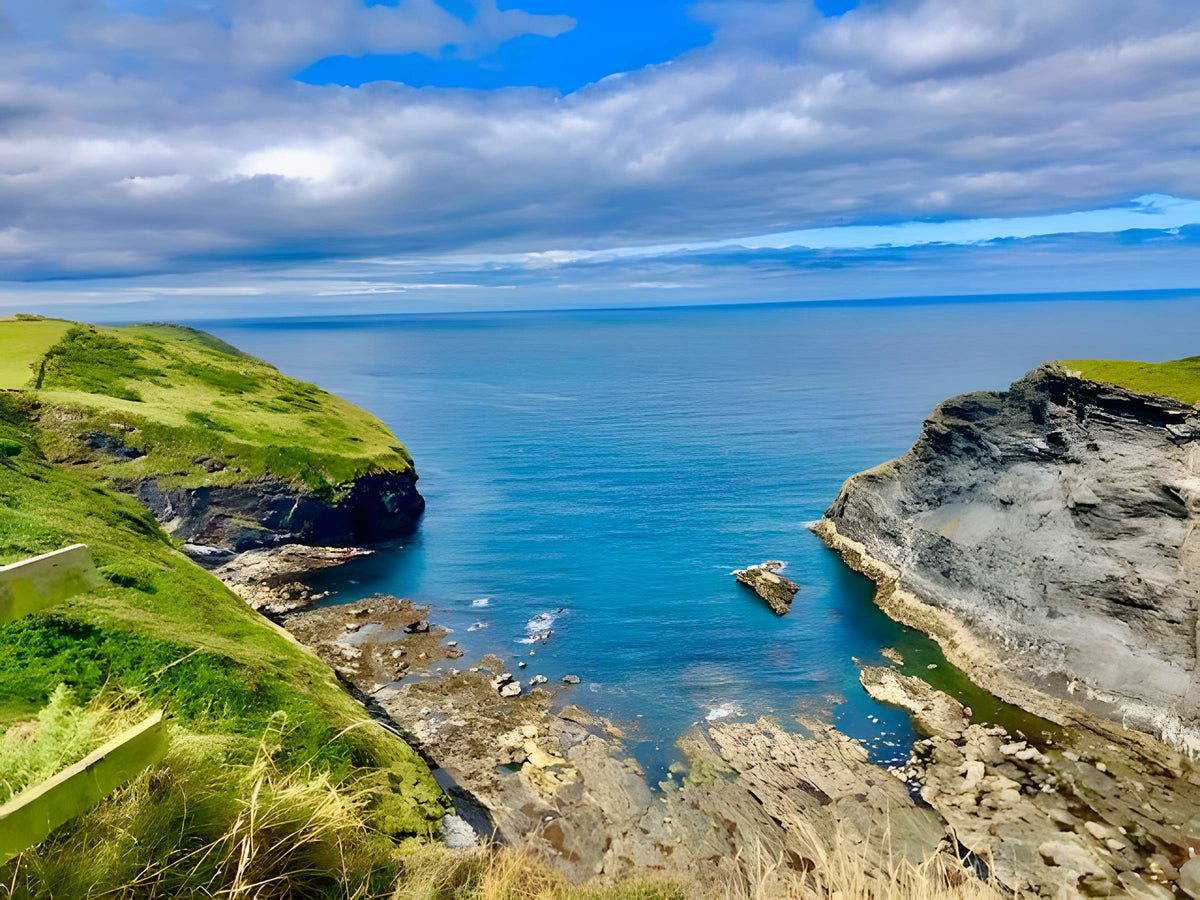
Many coves around Boscastle, Tintagel and Crackington Haven are reached across rocks or sand that is covered by the rising tide. When exploring:
- Start on a falling tide.
- Keep an eye on the time and the water.
- Know your way back.
- Head back well before high tide.
At beaches such as Trebarwith Strand and Bossiney Haven, the sand is covered at high tide.
Lifeguards
Lifeguarded beaches
The RNLI provides lifeguards at many Cornish beaches, mainly in the summer season. Check before you go whether your chosen beach is lifeguarded and when. Smaller coves near Boscastle are often not lifeguarded.
Flags
- Red and yellow flags: the area for swimming and bodyboarding, patrolled by lifeguards.
- Black and white chequered flags: the area for surfboards, kayaks and other craft. Don't swim here.
- Red flag: danger. Don't enter the water.
- Orange windsock: offshore or strong winds. Don't use inflatables.
Rip currents
Rip currents are strong channels of water flowing out to sea. They can be hard to spot. Signs include a gap in breaking waves, darker water or debris moving out to sea.
If caught in a rip
- Don't try to swim against it.
- If you can stand, wade, don't swim.
- Keep hold of your board or inflatable.
- Raise your hand and shout for help.
- If you can, swim parallel to the shore until free, then head for the beach.
The RNLI's advice is to "float to live" if you get into trouble in cold water: lean back and float until you can breathe calmly.
Cold water
The sea in Cornwall is cool year-round. Cold water shock can affect even strong swimmers. Enter slowly, wear a wetsuit for longer swims, and don't swim alone.
Inflatables
Inflatables can be blown out to sea quickly, especially in offshore winds. Use them only at lifeguarded beaches, between the red and yellow flags, and keep children close.
Cliffs
- Stay away from cliff edges on the coast path, especially in wind or after rain.
- Don't sit under cliffs. Rockfalls happen.
- Keep dogs on leads near cliffs.
See our coast path guide.
Rock pooling safely
- Wear shoes with grip.
- Watch for waves on exposed rocks.
- Keep an eye on the tide.
- Return creatures and rocks as you found them.
Children
- Keep young children within arm's reach near water.
- Agree a meeting point in case you get separated.
- Use a lifeguarded beach for swimming.
Read our camping with kids post.
In an emergency
Call 999 or 112 and ask for the Coastguard. Give your location as precisely as you can. The what3words app can help.
Beaches near our campsite
Our FAQ lists several beaches within reach of Lower Pennycrocker Farm, including Crackington Haven, Widemouth Bay, Bude, Bossiney and The Strangles. Read our beaches near Boscastle guide for more.
Weather
Conditions can change quickly on the Atlantic coast. A calm morning can become a rough afternoon. Check the forecast and surf report, and if in doubt, don't go out.
Sun safety
Even on cloudy days, the sun can be strong on the beach, with reflections off the sand and water. Use high-factor sun cream, reapply after swimming, wear hats and take shade. Keep children covered at the hottest times of day.
Dogs on beaches
Some beaches have seasonal dog restrictions in summer, so check signs before you go. Keep dogs away from cliff edges and out of rough seas, and don't go into the water after a dog in trouble. Call the Coastguard instead. Our camping with dogs post has more advice.
Weever fish
Weever fish bury themselves in sand in shallow water on some beaches and can give a painful sting if stepped on. Wearing beach shoes or wetsuit boots in the shallows helps. Lifeguards can advise and help if you are stung.
Frequently asked questions
What do the red and yellow flags mean?
They mark the area patrolled by lifeguards for swimming and bodyboarding.
What should I do if I'm caught in a rip current?
Don't fight it. Float, raise your hand and shout for help, then swim parallel to the shore if you can.
Who do I call in a coastal emergency?
Dial 999 or 112 and ask for the Coastguard.
Are beaches near Boscastle lifeguarded?
Some larger beaches, such as in Bude, have seasonal lifeguards. Many smaller coves don't. Check before you go.
Stay near Boscastle
Lower Pennycrocker Farm is a quiet, family-run campsite at St Juliot, about two miles from Boscastle (PL35 0BY). We welcome tents, touring caravans, motorhomes and campervans from 1 April to 31 October. Adults are £10 a night, children aged 5 and over £5, electric hook-up £7 and dogs £2 each (maximum two). Showers are free and you park beside your pitch. Check availability and book direct, or see pitches and prices.